
At Bösch Fertigungstechnik, decades of TNC experience combine with flexible job-shop manufacturing and advanced 5-axis technology.
When customers come to Bösch Fertigungstechnik with a problem for which neither drawings nor CAD data exist, the real work begins. One constant throughout the process is the company’s exclusive use of HEIDENHAIN TNC controls. Drawing on decades of hands-on experience with the technology, Bösch relies on TNC controls to meet demanding requirements for flexibility and ontime delivery.

FROM A MANUFACTURING ORDER TO A COMPLETE SOLUTION
Bösch Fertigungstechnik’s core expertise lies in machining sophisticated aluminum components. Largescale production plays only a minor role. Instead, the company focuses on one-off parts and small batch sizes, often involving unusual requirements and tight deadlines. One example from the confectionery industry illustrates
the company’s approach. A customer urgently needed a replacement component for candy production equipment after the lead time and cost quoted by the machine manufacturer had become unacceptable. The challenge was that neither technical drawings nor CAD data were available.
The Bösch team digitized the existing component directly on the machine using a touch probe and then created a CAD model from the collected data. The component was thus first recreated digitally and then in reality. In the process, the manufacturing specialists deliberately replaced the original cast design with a component machined from a solid aluminum block. The change delivered an additional benefit. If a tooth on the component gets bent during cleaning of the candy-making machine, it can usually be straightened and reused. With the previous cast version, similar damage often resulted in a fracture, requiring the entire component to be replaced. This example highlights the company’s commitment not only to manufacturing parts, but also to developing effective technical solutions.
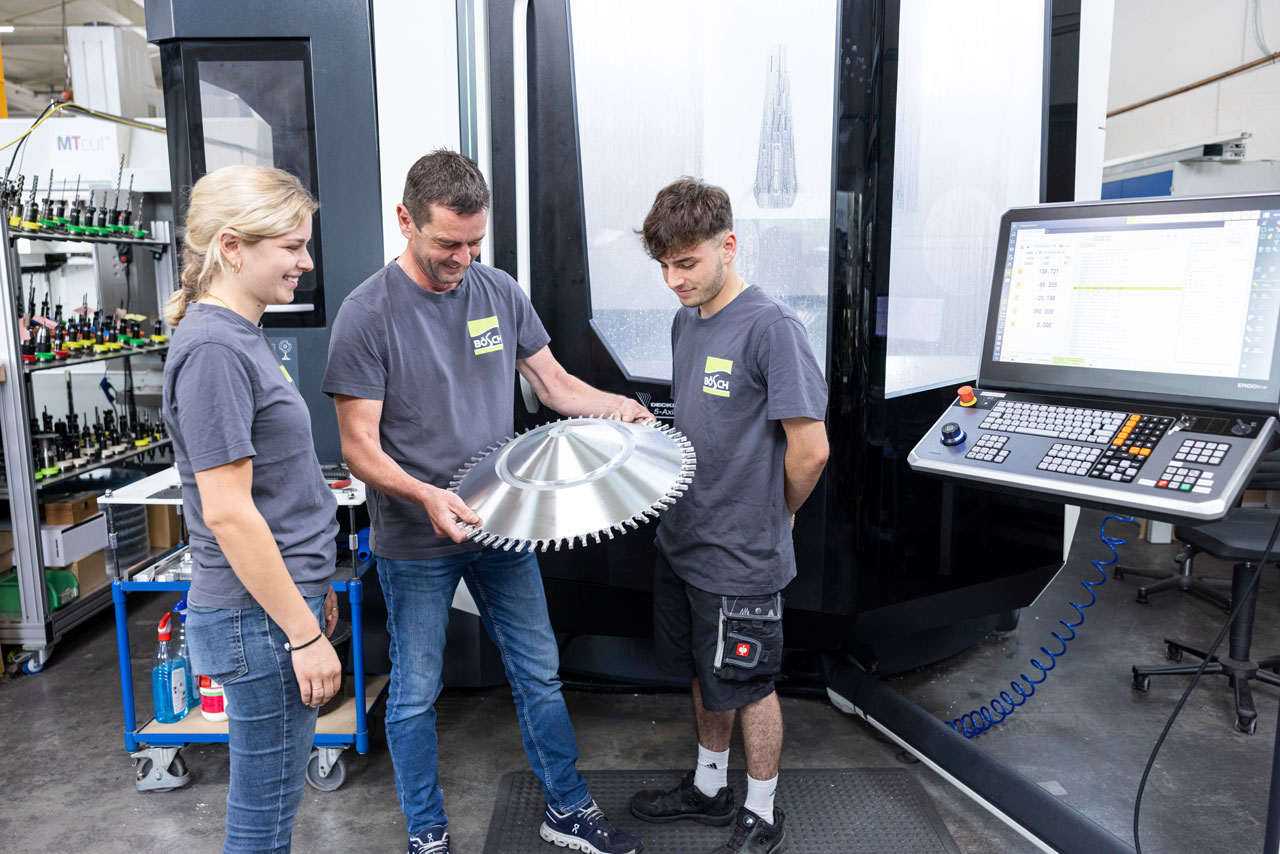
Jürgen Bösch with his daughter Leonie and son Lukas. Both are actively involved in the business and are already helping shape the future of the family’s company.


Bösch Fertigungstechnik GmbH
Based in Teningen in southern Germany, Bösch Fertigungstechnik specializes in the production of complex one-off parts and small production runs. Fast response times, exceptional flexibility, and extensive manufacturing expertise shape the company’s day-to-day operations. Since acquiring the company in 2016, Managing Director Jürgen Bösch has continuously invested in expanding and modernizing the machine shop. The company’s positive development continues, with plans to increase manufacturing capacity and invest in additional 5-axis technology. The foundation of this growth remains the combination of skilled employees, advanced manufacturing technology, and extensive control expertise. A look at the shop floor makes it clear that productivity depends on more than machines alone. Success is driven by the interplay of experience, process expertise, and the ability to solve even unusual challenges quickly and reliably. That is precisely what sets Bösch
Fertigungstechnik apart from the competition.
Kontakt
Bösch Fertigungstechnik GmbH
Geschäftsführer: Jürgen Bösch
Siemensstraße 14
79331 Teningen
Tel.: 07663 / 91 42 06
info@boesch-fertigungstechnik.de